
Seal Testing
Seal testing of elastomers, polymer sealing materials and complete seals for fluid compatibility, rapid gas decompression, friction and wear, in your fluid and at your pressure and temperature.
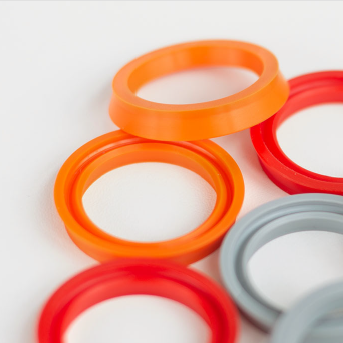


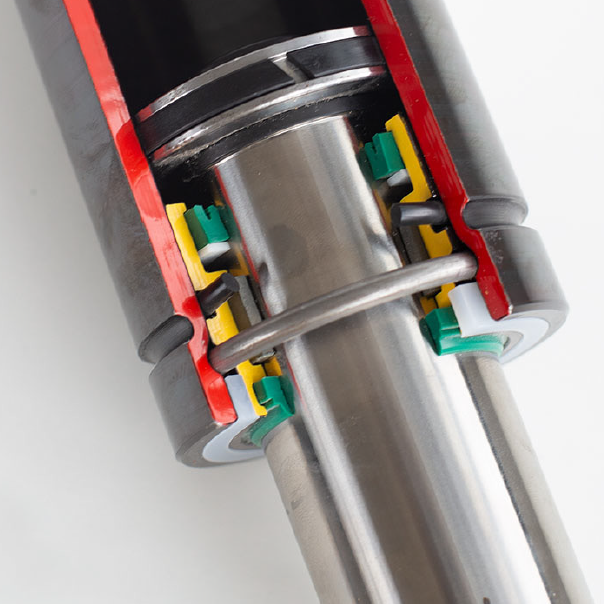

Why seals fail
- Fluid incompatibility. Oils, fuels and hydraulic fluids can make elastomers swell, shrink, harden or soften.
- Rapid gas decompression. Gas absorbed under high pressure expands when the pressure drops quickly and can blister or crack the seal.
- Wear and extrusion. Sliding against the counterface removes material, and high pressure can push the seal into the gap.
- Friction. High or unstable friction causes heat, energy losses and jerky motion.
- Temperature. At low temperature elastomers stiffen; at high temperature they age.
Seal tests in our network
We choose the setup that matches your question: material screening on samples, tests in the real medium, or tests of complete seals.
| Test setup | What it shows | Standard |
|---|---|---|
| Test benches for sealing systems | Friction and wear of reciprocating and rotary seals at pressures up to 200 bar | – |
| Fluid immersion and ageing | Change in volume, mass and hardness of elastomers in liquids | ISO 1817 |
| Hydrogen pressure chamber | Conditioning and rapid gas decompression in gaseous hydrogen up to 200 bar | – |
| Cryogenic tribometers | Friction and wear of sealing materials in liquid hydrogen, helium or nitrogen, down to −268 °C | – |
| Tribometers (reciprocating, pin-on-disc) | Friction and wear screening of seal materials against counterface materials and coatings | – |
| Elastomer property tests | Hardness, tear strength and abrasion resistance | ISO 48-2, ISO 34-1, ISO 4649 |
What we measure
- Change in volume, mass and hardness after exposure
- Damage after rapid gas decompression
- Friction during the test
- Wear of the seal and the counterface, with 3D surface topography
Key seal test standards
These are the methods most often used in this field. Where no standard fits your application, we propose a test closer to your operating conditions. Search all standards in our test standards finder.
Fluid compatibility
| Standard | Test | What it measures |
|---|---|---|
| ISO 1817 | Effect of liquids on rubber | Change in volume, mass and properties after immersion |
| ASTM D471 | Effect of liquids on rubber | Resistance of rubber to liquids |
| ASTM D4289 | Elastomer compatibility of greases and fluids | Volume and hardness change of elastomer coupons |
| ASTM D6546 | Elastomer seals with industrial hydraulic fluids | Hardness, properties, compression set and volume of O-rings after exposure |
| ISO 6072 | Hydraulic fluids and standard elastomers | Effect of hydraulic fluids on reference elastomers |
| ASTM D7216 | Engine oil compatibility with seal elastomers | Effect of engine oils on reference elastomers |
| CEC L-112 | Elastomer compatibility bench test | Property and volume change of reference elastomers in engine oil |
| ASTM D5662 | Gear oil compatibility with seal elastomers | Effect of gear oils on oil seal elastomers |
Gas decompression and hydrogen
| Standard | Test | What it measures |
|---|---|---|
| ISO 23936-2 | Elastomers for oil and gas production | Qualification of elastomers, including rapid gas decompression |
| NORSOK M-710 | Qualification of non-metallic materials | Qualification of sealing materials, including rapid gas decompression |
| ISO 19880-7 | Rubber O-rings for hydrogen fuelling stations | Requirements and test methods for O-rings in gaseous hydrogen |
Elastomer properties
| Standard | Test | What it measures |
|---|---|---|
| ISO 34-1 | Tear strength of rubber | Tear strength (trouser, angle and crescent test pieces) |
| ISO 48-2 | Rubber hardness, 10 to 100 IRHD | IRHD hardness |
| ISO 4649 | Abrasion resistance, rotating drum | Volume loss against an abrasive sheet |
| ASTM D1414 | Test methods for rubber O-rings | O-ring properties and changes after ageing |
References
- Test-Fuchs: benchmarking of sealing materials in liquid hydrogen for new valves
- VDL ETG: understanding the degradation of vacuum seals
- Epidor SRT: benchmarking of elastomeric sealing materials
- Trygonal: development of self-lubricating seals for pneumatic actuators
Read the full statements in our case studies.
For seals in hydrogen, see hydrogen tribology testing.
Industries
- Hydrogen: seals in gaseous and liquid hydrogen
- Aerospace: seals for cryogenic and hydraulic systems
- Marine & offshore: elastomers exposed to high-pressure gas and seawater
One contact, the whole European network
i-TRIBOMAT is the single entry point to more than 130 tribometers and more than 250 experts across Europe. You do not need to find, compare and coordinate several laboratories: we do it for you.
- One contact and one offer for the whole programme
- Independent choice of setup: we match your application to the right test, not to the equipment we happen to own
- One consistent report and, on request, your results in your own online database (see Data-Driven Services)
- Confidentiality covered by a single agreement
Frequently asked questions
Can you test complete seals or only materials?
Both. Materials are screened on samples; complete reciprocating and rotary seals are tested on test benches, depending on size and pressure.
What is rapid gas decompression?
When a seal has absorbed gas at high pressure and the pressure drops quickly, the gas expands inside the material and can cause blisters and cracks. Standards such as ISO 23936-2 and NORSOK M-710 describe how to test this.
Can you test seals in liquid hydrogen?
Yes. Our cryogenic tribometers run in liquid hydrogen, liquid helium and liquid nitrogen down to −268 °C.
How do I start?
Send us a short description of the seal, the fluid or gas, the pressure, temperature and motion, and the question you want answered. We reply with a test proposal and an offer.
Or write to office@i-tribomat.eu. See also all tribological characterisation services.